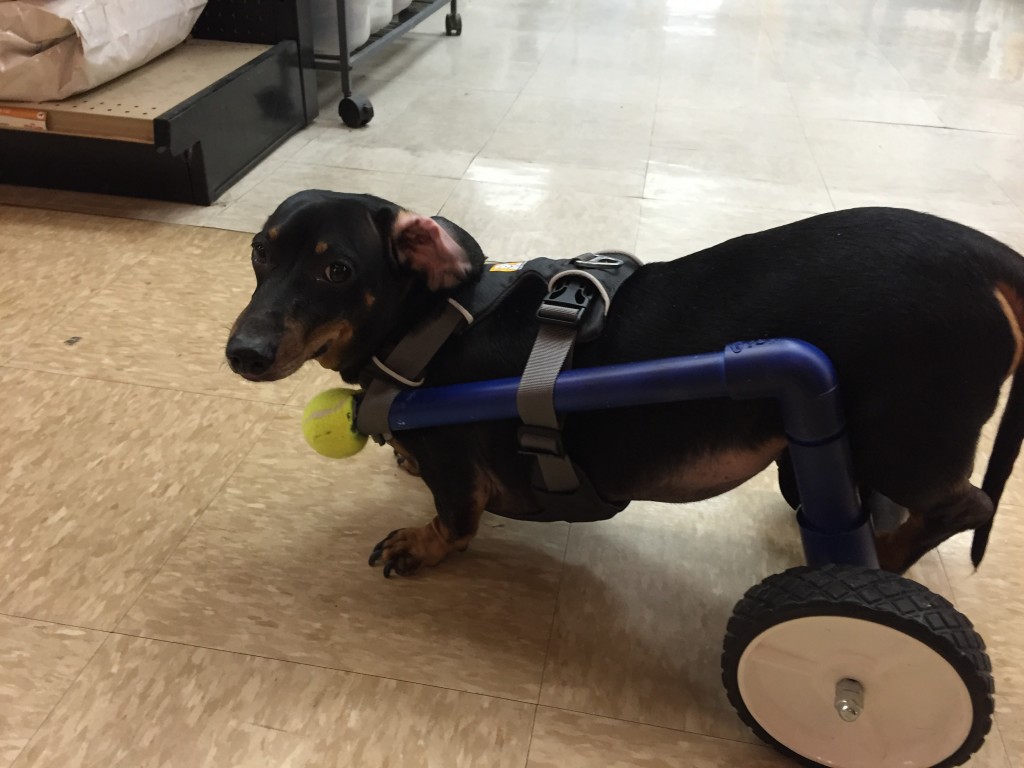
Dachshund s are probably one of the most recognizable breeds of dogs due to their long backs; long ears; and short, stumpy legs. They are also a very popular breed of dog, most likely due to their loving personality and their ever-readiness to cuddle. My own Dachshund mix never turns down an invitation for some under-the-cover snuggling. However, they are also known for some pretty serious health issues, and at the top of that list is intervertebral disc disease. If you have ever owned or known a Dachshund, you have probably heard of this disease-also known as “back disease” or a “slipped disc.” The disease can range from mild pain to complete paralysis, and if you own a Dachshund (or any breed with a long back-Basset, Corgi, German Shepherd, etc.), there are some facts you need to know.
Intervertebral disc disease
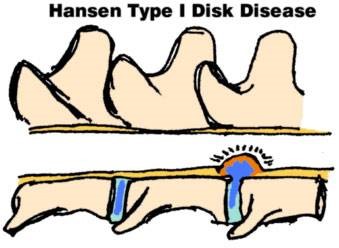 Intervertebral disc disease (IVDD) involves the cartilage discs that are located between each bony vertebra. Discs act as shock absorbers for the vertebral column and consist of an outer fibrous ring and an inner gelatinous body. IVDD happens when the disc herniates through extrusion (type I) or protrusion (type II). Dachshunds typically fall into the type category, which is associated
 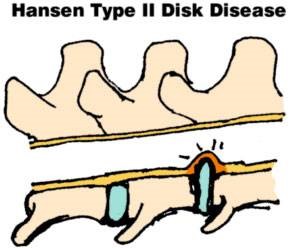 with a degeneration of the disc during the first two years of life; the inner gelatinous portion of the disc becomes calcified and can suddenly herniate into the spinal cord. If the herniation is severe enough, it can lead to paralysis. Type II disc disease is usually more gradual and smaller in nature and typically involves other breeds of dog besides the Dachshund.
Symptoms of IVDD
So, what do you do if your Dachshund has a disc herniation? It really depends on the severity. Dogs that just experience pain due to herniation typically become lethargic, cry out, and have a hunched over appearance. These mild IVDD cases can be treated with pain medications, anti-inflammatories, muscle relaxants, and rest. Dogs that become paralyzed often require surgery. Board-certified veterinary surgeons can perform surgery to decompress the spinal cord, which restores mobility in most dogs affected with this disease. If you suspect IVDD in your dog, see your vet ASAP.
Diagnosis of IVDD
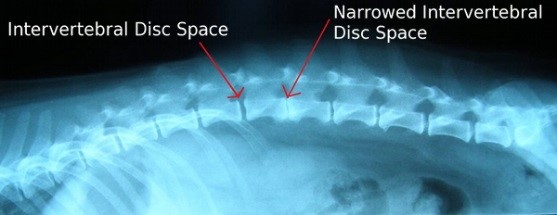
When I suspect a slipped disc as the cause of a dog’s symptoms, the first thing I do is a complete neurologic exam. This means testing reflexes by pinching toes, flipping feet over, and using the reflex hammer. Sometimes I can localize the pain to a specific area by palpating the spine. Often, I do radiographs, or x-rays, to help diagnose IVDD and localize exactly which disc is the culprit. On x-rays I can often find a narrowed disc space where a disc used to live or a calcified disc.
Treatment of IVDD
If your dog is in pain but has reflexes intact, oral medication and strict rest are prescribed. If your dog’s reflexes are not up to par, a referral to a neurologist is warranted. Unfortunately, as you might expect, emergency back surgery is not cheap. For those who cannot afford surgery, there are some options. Acupuncture treatment has been shown to help repair nerve damage and is an option at Reber Ranch. Also, many dogs do quite well in doggy wheelchairs. The most important thing is that we control your dog’s pain and provide a good quality of life, and at Reber Ranch we will work with you to provide those things. Please never hesitate to call or email us with questions.